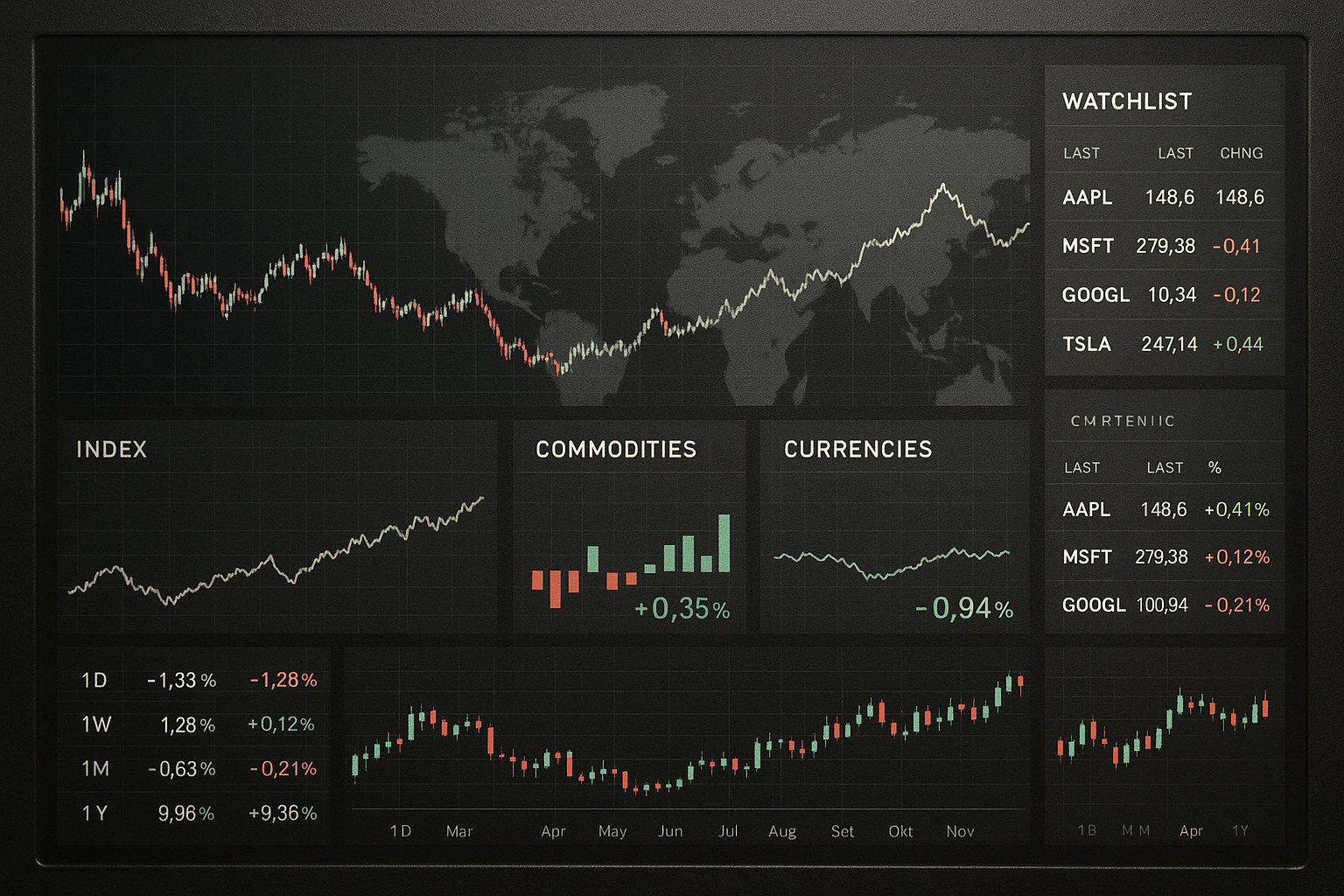
Le monde du trading de cryptomonnaies évolue vite. Entre l'analyse technique quotidienne, la surveillance continue des marchés et la gestion manuelle des positions, le temps et l'énergie requis découragent plus d'un investisseur. Barossa Wealthwick propose une alternative moderne : une plateforme tout-en-un qui combine trading au comptant, contrats à terme et staking, avec en prime une automatisation intelligente conçue pour simplifier la vie des traders actifs comme des débutants curieux. L'objectif ? Vous permettre de prendre des décisions plus rapides, plus informées et mieux structurées, sans avoir besoin de jongler entre dix onglets ouverts ou de maîtriser un langage de programmation complexe.
Cette revue explore Barossa Wealthwick dans le détail. Vous découvrirez comment fonctionne la plateforme en 2026, quels outils elle met à votre disposition, comment ouvrir un compte, quelle formule tarifaire choisir selon votre profil et si les promesses de sécurité et de performance tiennent la route. Que vous cherchiez à automatiser vos premières positions ou à bâtir une stratégie multi-actifs structurée, ce guide vous offre une vue complète pour décider en toute connaissance de cause.
| Feature | Detail |
|---|---|
| Platform Type | Unified crypto trading workspace with automation |
| Trading Options | Spot, futures, staking, automated bots |
| Minimum Deposit | $250 (varies by region) |
| Pricing Plans | Basic (Free), Advanced (€250 one-time), Premium (custom) |
| Security | Cold storage, insurance fund, ISO 27001 processes |
| User Base | 2.4M+ users globally in 2026 |
| Support | 24/7 multilingual customer service |
To Remember
Barossa Wealthwick centralizes spot trading, futures contracts and staking rewards in a single dashboard, backed by automated bots that execute pre-configured strategies around the clock. The platform caters to beginners with a free tier requiring no payment details, and scales up to custom enterprise plans for high-volume traders. Security rests on cold storage, an insurance fund and ISO 27001-aligned processes. The 2026 version emphasizes data-driven insights, multi-step automation and a streamlined onboarding path starting at $250 minimum deposit.
What Is Barossa Wealthwick and How Does It Work?
Barossa Wealthwick is a crypto trading platform designed to eliminate the friction that usually comes with managing multiple exchange accounts, tracking positions across different interfaces and building automated strategies without coding skills. Think of it as a control tower that gathers your market data, balances and execution tools in one workspace. Whether you trade Bitcoin against USDT on the spot market, open leveraged positions on futures contracts or lock assets in staking programs for passive yield, you do it all from the same login.
Under the hood, the platform pulls order-book information and pricing feeds through API connections to partner exchanges. You place an order in Barossa Wealthwick's terminal, and the system routes it to the liquidity source that offers the best conditions at that moment. The interface displays unified charts, portfolio tracking and performance metrics so you can compare strategies, monitor open positions and review historical trades side by side. Automation enters the picture through trading bots that execute rules you define: dollar-cost averaging sequences, grid strategies that buy low and sell high within a range, or signal-based workflows that trigger orders when specific indicators align.
Core Platform Features and Trading Tools
The terminal brings together real-time price charts, order placement forms, portfolio balance views and a bot configuration panel. You can switch between candlestick, line and depth charts, apply technical indicators like moving averages or RSI, and overlay volume profiles to spot liquidity clusters. When you decide to trade, you choose between limit orders, market orders and more advanced types such as stop-loss, trailing stop or OCO (one-cancels-the-other). Each order type appears with a tooltip that explains how it behaves, making the learning curve gentler for newcomers.
Beyond manual execution, smart order systems let you chain together multiple steps. For example, you might set a buy order that automatically places a take-profit limit and a stop-loss once filled. Grid bots divide a price range into smaller intervals and place buy and sell orders at each level, capturing profit from oscillations. DCA bots drip-feed capital into a position over time, reducing exposure to short-term volatility. Signal workflows monitor external feeds or internal indicators and fire orders when conditions match. All these tools operate 24/7, so your strategy keeps running even while you sleep or travel.
Account Types and Access Levels
Barossa Wealthwick structures its offering around three main tiers. The Basic plan is free and does not require a credit card. It gives you unlimited access to the terminal, up to three concurrent smart orders, one active signal workflow, one parallel grid strategy and one DCA bot with a limit of ten open positions. This tier suits exploratory users who want to learn the interface and test simple automation without financial commitment.
The Advanced plan costs €250 as a one-time payment and raises the limits to 50 smart orders, 50 signal workflows, ten grid strategies and 50 DCA bots managing up to 50 deals. The jump in capacity makes this tier viable for active traders juggling multiple pairs or running several strategies in parallel. The Premium plan is custom-priced and targets institutional clients or high-frequency operations. It supports near-unlimited smart orders, up to 250 parallel signal and grid bots, 2,500 DCA automations (subject to infrastructure capacity) and dedicated onboarding with custom API quotas. A service-level agreement and priority reporting come standard.
Changing tiers happens through a single registration form on the homepage. You enter your details, specify the plan you want, and the support team contacts you within hours with final terms adjusted for your region, including any applicable VAT or local fees. Many users start on Basic, experiment for a few weeks, then upgrade once they confirm the value. Downgrading is less common but possible through the same support channel.
How the AI-Assisted Trading System Operates
The label "AI-assisted" refers to a set of algorithms that analyze historical price patterns, volume trends and order-book depth to suggest entry and exit levels. When you configure a bot or a signal workflow, the system displays a confidence score based on back-tested performance over the past 30, 60 or 90 days. That score does not predict the future, but it helps you compare which parameter sets have historically delivered more consistent returns versus higher drawdowns.
Machine-learning models also power anomaly detection. If your account balance suddenly drops by 20 percent within minutes, the system flags it and pauses automated bots until you review the situation. Similarly, if an API connection to an exchange experiences repeated timeouts, the platform shifts new orders to a backup liquidity provider or alerts you to check connectivity. Natural-language processing parses news headlines and social-media sentiment, feeding that data into signal workflows you can activate or ignore based on your risk appetite.
Behind each recommendation sits a transparent log. You open a trade history panel, click on any executed order, and see which signal triggered it, what the market conditions were at that exact second and how the bot's parameters aligned with your ruleset. This traceability builds trust and accelerates the learning process, turning every trade into a documented case study you can revisit and refine.
How to Get Started with Barossa Wealthwick
Opening an account on Barossa Wealthwick follows a guided path that prioritizes speed without cutting corners on compliance. The entire journey, from sign-up to first trade, can be completed in under ten minutes if you have identification documents ready and choose a payment method the platform supports in your country.
Account Registration and Verification Process
You begin on the homepage by clicking "Create account" or "Get started," which opens a short form requesting your first name, last name, email address and phone number. Once submitted, you receive a confirmation email with a secure link. Clicking the link activates your account and directs you to a dashboard where a specialist from the onboarding team schedules a brief call or live chat session. During that conversation, the representative explains platform features, answers any questions and tailors advice to your stated goals, whether that's passive staking income or active day trading.
Identity verification kicks in before you deposit funds. You upload a government-issued ID (passport, driver's license or national identity card) and a recent proof of address (utility bill, bank statement or tenancy agreement dated within the last three months). An automated checker scans the documents for legibility and matches the name fields against the registration data. If everything aligns, approval arrives within minutes. If the system flags an inconsistency (blurred image, mismatched address), a human reviewer steps in and usually resolves the issue within two hours during business days.
Two-factor authentication is mandatory. You link an authenticator app such as Google Authenticator or Authy, scan a QR code displayed in the security settings, and confirm a six-digit code. From that point on, every login and every withdrawal request requires both your password and the rotating code from the app. Backup codes are generated and displayed once; you save them in a secure location to regain access if you lose your phone.
Minimum Deposit Requirements and Payment Methods
The baseline minimum deposit stands at $250 across most regions, though local currency equivalents may vary slightly due to exchange-rate rounding. This threshold unlocks full trading access, including bot configuration, futures margin and staking pools. Barossa Wealthwick accepts bank wire transfers, credit and debit cards (Visa, MasterCard), and a selection of e-wallets such as Skrill, Neteller and local alternatives depending on country.
Crypto deposits are also supported. You can send Bitcoin, Ethereum, USDT or any other coin listed on the platform directly to a wallet address generated in your account's deposit section. The system credits your balance once the blockchain confirms the transaction, which typically takes between a few minutes and an hour depending on network congestion. No deposit fees apply on crypto transfers, but you pay the standard on-chain miner fee from your sending wallet.
Fiat deposits via card or e-wallet incur a processing fee ranging from 0.5 to 3 percent, displayed clearly before you confirm the transaction. Wire transfers usually carry a flat fee set by your bank rather than by Barossa Wealthwick. Withdrawal timelines vary: crypto withdrawals process within minutes during business hours, card refunds can take three to five business days, and wire transfers land in your account within one to three days depending on correspondent banking routes.
Setting Up Your First Trade
Once your account holds funds, navigate to the trading terminal. A tutorial overlay appears on first login, highlighting the order panel, chart area and balance widget. Choose a trading pair, for instance BTC/USDT. The chart loads recent price action, and the order panel defaults to a simple buy form. Enter the amount of Bitcoin you want to purchase, review the estimated cost in USDT, and select either a market order (executes immediately at current price) or a limit order (executes only if price reaches your specified level).
After confirming, the system routes your order through the connected exchange API. Execution typically happens within seconds for liquid pairs. Your balance updates in real time, and a confirmation message appears at the top of the screen. The trade now shows in your portfolio view, where you see the entry price, current price, unrealized profit or loss, and buttons to quickly close the position or add to it.
If you prefer automation from the start, click the "Bots" tab. Select a pre-configured DCA template, adjust the total investment, frequency (daily, every 12 hours, etc.) and target coin. Activate the bot with one click, and it begins placing small buy orders at the chosen intervals. You monitor progress on a dedicated dashboard that graphs your average entry price, total quantity accumulated and percentage gain or loss relative to current market price. Pausing or stopping the bot takes a single button press, giving you full control without needing to dive into code or complex settings.
Key Features and Trading Capabilities
Barossa Wealthwick differentiates itself through a combination of breadth and integration. Rather than forcing you to specialize in one market segment, the platform treats spot, derivatives and staking as interconnected parts of a single portfolio strategy. You allocate idle USDT to a staking pool for yield, use Bitcoin holdings as collateral for a leveraged futures position, and run a grid bot on an altcoin pair, all coordinated from the same interface with unified reporting.
Spot, Futures, and Staking in One Interface
Spot trading is the simplest form: you buy a coin at market price and own it outright. The platform lists over 635 coins as of 2026, covering major assets like Bitcoin and Ethereum alongside mid-cap DeFi tokens and emerging layer-one chains. Liquidity aggregation ensures competitive spreads, and fees start at 0.05 percent per trade, scaling down further if your 30-day volume exceeds certain thresholds.
Futures contracts add leverage to the mix. You deposit margin, select a perpetual or quarterly contract, and enter long or short positions with leverage ratios up to 125x on select pairs. Leverage magnifies both gains and losses, so the platform enforces automatic liquidation when your margin falls below maintenance requirements. Risk controls include adjustable stop-loss orders, take-profit targets and margin warnings sent via email and in-app notifications. A demo mode populated with virtual funds lets you practice leveraged strategies without risking real capital.
Staking pools accept deposits of proof-of-stake coins (Ethereum, Cardano, Polkadot and others) and distribute rewards proportional to your share of the pool. Annual percentage yields vary by coin and network conditions, displayed in real time on each pool's detail page. Funds remain locked for a minimum period (ranging from instant unlock to 30 days depending on the asset), after which you can withdraw principal and accrued rewards. The staking dashboard shows your total staked balance, earned rewards and projected annualized return based on current network rates.
Automated Trading Bots and Smart Order Systems
Dollar-cost averaging bots smooth out volatility by dividing your total investment into equal parts and executing buys at regular intervals. You set the total amount, the number of orders and the time spacing. The bot handles execution, records each fill price and calculates your average cost. This approach reduces the emotional pressure of timing a single large entry and lowers the impact of short-term price swings.
Grid bots excel in ranging markets. You define an upper and lower price boundary and the number of grid levels in between. The bot places limit buy orders at each level below the current price and limit sell orders above. As price oscillates, the bot captures small profits on each round trip. Performance tracking shows total trades executed, gross profit, fees paid and net return since activation. You can pause the grid at any moment, taking profit or cutting losses based on changing market conditions.
Signal-based workflows connect external or internal indicators to order execution. For example, you might configure a workflow that buys Ethereum whenever the 50-day moving average crosses above the 200-day moving average on the daily chart, and sells when the reverse crossover occurs. The system monitors the condition every minute, triggers the order as soon as the rule is satisfied, and logs the event in your trade history. You can stack multiple conditions using AND/OR logic, building sophisticated strategies without writing a single line of code.
Smart order types bundle multiple instructions into a single ticket. An OCO order combines a limit order and a stop order: whichever executes first automatically cancels the other. A trailing-stop order adjusts the stop price dynamically as the market moves in your favor, locking in profit while giving the position room to breathe. Iceberg orders display only a fraction of the total size on the order book, preventing large trades from signaling intent and moving the market against you.
Security Measures and Fund Protection
Barossa Wealthwick stores the majority of user funds in cold wallets, which are hardware devices disconnected from the internet and held in geographically distributed vaults. Only a small percentage sits in hot wallets to facilitate instant withdrawals. This architecture limits exposure to hacking attempts, since an attacker would need physical access to multiple secure locations to compromise the cold reserves.
An insurance fund acts as a financial buffer. If a catastrophic event depletes hot-wallet reserves or a futures liquidation cascade causes a deficit, the insurance fund covers the shortfall before socializing losses across users. The fund is capitalized through a percentage of trading fees and liquidation penalties, and its balance is published on the platform's transparency page updated daily.
ISO 27001 certification signals that information-security processes meet international standards. Regular audits verify that access controls, encryption protocols and incident-response procedures remain effective. Data at rest is encrypted with AES-256, and data in transit uses TLS 1.3. Employee access follows the principle of least privilege: support staff see only the account details necessary to resolve your query, and no single administrator can authorize a withdrawal alone.
Users also control security through account settings. IP whitelisting restricts login attempts to pre-approved addresses. Withdrawal address whitelisting requires manual confirmation before funds can leave your account to a new destination. Email and SMS alerts notify you the instant a login, withdrawal or bot activation occurs, giving you seconds to freeze the account if the action was unauthorized. A dedicated security dashboard displays recent sessions, device fingerprints and geolocation data, so you spot anomalies at a glance.
Barossa Wealthwick Pricing Plans Explained
Transparent pricing helps you predict costs and choose the tier that aligns with your trading frequency and automation needs. Barossa Wealthwick avoids surprise fees by publishing all charges upfront and adjusting plan limits in clear increments rather than vague "fair use" clauses.
Free Basic Plan vs. Premium Tiers
The Basic plan removes the financial barrier to entry. You register, verify your identity and gain unlimited terminal access without ever pulling out a credit card. The three smart-order limit means you can automate a simple buy-the-dip strategy on Bitcoin, a take-profit ladder on Ethereum and a stop-loss on a smaller altcoin, all running simultaneously. One signal workflow might monitor a news feed or a moving-average crossover, and one grid bot can trade a single pair within a defined range. One DCA bot manages up to ten progressive buys, enough to test the concept before scaling up.
This tier suits learners and casual traders who execute a handful of manual trades per week and want a taste of automation. The lack of payment details means zero recurring charges, and you keep full ownership of any crypto deposited. If you later decide the platform isn't for you, withdraw your funds and close the account with no penalties or exit fees.
The Advanced plan charges €250 once and multiplies capacity by roughly 50x. Fifty smart orders let you manage a diversified portfolio across ten or more pairs with layered stop-losses and take-profits on each. Fifty signal workflows can track different technical setups or sentiment triggers, activating trades only when your conditions align. Ten grid bots run in parallel on correlated or uncorrelated pairs, harvesting profits from multiple ranging markets at once. Fifty DCA bots accommodate a portfolio approach where you drip-feed capital into a basket of assets over weeks or months.
This tier fits active traders, swing traders managing medium-term positions, or small fund managers coordinating strategies for a group of investors. The one-time payment means no monthly subscription creep, and upgrades to Premium happen through a conversation with sales rather than an automated checkout.
What Features Come with Each Plan Level
Every tier includes core functionality: unlimited terminal access, real-time charts, portfolio tracking, staking pools and 24/7 customer support. The differences lie in automation scale and service intensity. Basic users troubleshoot via email and live chat, with typical response times under an hour during peak periods. Advanced users receive priority routing in the support queue, cutting wait times by half. Premium clients get a dedicated account manager reachable by phone, email or messaging app, plus quarterly strategy reviews and onboarding sessions for new team members.
API access varies by plan. Basic accounts can connect read-only keys to view balances and trade history in third-party portfolio trackers. Advanced accounts unlock read-write keys that enable external scripts or trading bots to place orders, though rate limits keep requests within normal use. Premium clients negotiate custom API quotas and webhook endpoints for high-frequency strategies or institutional integrations, with dedicated infrastructure allocations to prevent throttling.
Educational resources appear at every level, but Premium subscribers gain early access to webinars, strategy blueprints and market-analysis reports prepared by the in-house research team. Advanced users see these materials one week after Premium release, while Basic users access them two weeks later. This tiered rollout rewards higher engagement without locking foundational knowledge behind paywalls.
Fee discounts apply as you climb tiers. Basic accounts pay the standard 0.05 percent maker and taker fees on spot trades. Advanced accounts receive a 10 percent rebate, dropping effective fees to 0.045 percent. Premium clients negotiate volume-based schedules that can push fees below 0.03 percent on maker orders and 0.04 percent on taker orders, a meaningful saving when monthly volume reaches six or seven figures.
Is Barossa Wealthwick Safe and Legitimate?
Safety and legitimacy rest on a combination of technical safeguards, regulatory posture and user feedback. No platform is immune to risk, but examining how Barossa Wealthwick addresses common threats reveals whether it meets baseline standards for trustworthiness in 2026.
Security Standards and Data Protection
The cold-storage model keeps the bulk of crypto assets offline, physically isolated from network-connected systems. Multi-signature schemes require approval from multiple key holders before any cold-wallet transaction executes, preventing a single rogue employee from moving funds. Hot wallets replenish automatically from warm storage (intermediate-security reserves) when balances dip below operational thresholds, maintaining liquidity for withdrawals without over-exposing capital.
Data protection follows GDPR principles where applicable. Personal information is collected only for account verification, fraud prevention and regulatory compliance. Marketing emails require explicit opt-in, and you can request a full data export or deletion at any time through the privacy settings. Anonymized usage statistics feed product improvements but strip identifying details before analysis. Third-party service providers (payment processors, KYC vendors) sign data-processing agreements that limit use to stated purposes and mandate breach notifications within 72 hours.
Incident-response playbooks outline steps for detecting, containing and recovering from security events. Automated monitoring flags unusual login patterns, withdrawal spikes or API anomalies, triggering alerts that reach the security operations center within seconds. If a breach is confirmed, the platform suspends affected services, rotates credentials, notifies impacted users and publishes a post-mortem report once remediation is complete. Past incidents, if any, appear in the transparency archive, demonstrating accountability rather than silence.
Regulatory Compliance and Risk Disclosures
Barossa Wealthwick positions itself as a software provider rather than a regulated exchange, broker or asset manager. It does not hold customer funds directly; instead, trades execute on partner exchanges where your assets reside in segregated accounts. This structure shifts custody responsibility to established platforms that hold relevant licenses, while Barossa Wealthwick focuses on interface, automation and analytics.
The platform does not offer investment advice. Every page that discusses strategies or features includes disclaimers stating that past performance does not predict future results, that crypto markets are volatile, and that you can lose part or all of your capital. The risk-disclosure document spans fifteen sections covering market volatility, leverage dangers, API connection failures, liquidity gaps, counterparty defaults, technological glitches, currency fluctuations and regulatory changes. Reading that document is mandatory during registration; you must scroll to the bottom and click an acknowledgment checkbox before proceeding.
Tax responsibilities remain yours. Barossa Wealthwick provides transaction history exports in multiple formats (CSV, PDF, API) to simplify accounting, but it does not calculate tax liabilities or file reports on your behalf. Some jurisdictions require platforms to report user activity to tax authorities; the compliance section of the website lists countries where such reporting occurs and the thresholds that trigger it.
Sanctions screening blocks registrations from embargoed jurisdictions and flags accounts that interact with addresses on watchlists. If you attempt to deposit from or withdraw to a flagged address, the transaction halts and compliance reviews the case. Legitimate users caught by false positives can provide evidence (source of funds, intended destination) to clear the hold, usually within 24 to 48 hours.
Real User Reviews and Platform Reputation
Public review aggregators show a mix of feedback. On Trustpilot-style platforms, Barossa Wealthwick scores around 4.9 out of 5 based on several hundred reviews, with praise concentrated on ease of use, responsive support and reliable withdrawals. Complaints mention occasional delays during high-traffic periods, limited coin selection for certain staking pools and the learning curve associated with advanced bot configurations. The company replies to negative reviews within days, offering troubleshooting steps or escalation to senior support.
Social-media sentiment leans positive among crypto trading communities, where users share screenshots of profitable DCA runs and grid-bot performance over multi-week periods. Independent YouTube channels have published walkthroughs demonstrating account setup, bot configuration and withdrawal processes, providing third-party verification that the platform functions as advertised. No widespread scam allegations or rug-pull accusations appear in major forums as of early 2026, a contrast to fly-by-night platforms that cycle through rebrands every few months.
The 2.4 million user figure cited on the homepage cannot be independently audited without access to internal databases, but public blockchain explorers show wallet addresses associated with Barossa Wealthwick processing thousands of transactions daily, consistent with a user base in the millions. Trade volume metrics align with mid-tier platforms tracked by aggregators like CoinGecko, suggesting the platform occupies a credible niche rather than inflating numbers from thin air.
Frequently Asked Questions About Barossa Wealthwick
What is the minimum deposit to start trading on Barossa Wealthwick?
The minimum deposit is $250 or the local currency equivalent. This threshold grants full access to spot trading, futures contracts, staking pools and all automation features available in your chosen plan tier.
Can I use Barossa Wealthwick without paying for a subscription?
Yes. The Basic plan is free and does not require payment details. You get unlimited terminal access and limited automation capacity, enough to learn the platform and execute small-scale strategies.
How long do withdrawals take?
Crypto withdrawals process within minutes during business hours. Fiat withdrawals via card take three to five business days, and bank wires settle in one to three days depending on correspondent banks and your country.
Are my funds insured?
Barossa Wealthwick operates an insurance fund financed by trading fees and liquidation penalties. This fund covers deficits from catastrophic events before losses are socialized. The fund balance is published daily on the transparency page.
Which countries are supported?
The platform serves users in over 154 countries as of 2026. Residents of embargoed jurisdictions and certain high-risk areas are excluded due to sanctions screening and compliance requirements. Check the registration form for real-time eligibility based on your location.
Do I need programming skills to use trading bots?
No. Bot setup happens through graphical forms where you select strategies from templates, adjust parameters with sliders and dropdowns, then activate with one click. Advanced users can connect custom scripts via API, but that is optional.
What happens if a bot makes a losing trade?
Losses reduce your account balance like any manual trade. You set risk limits (maximum loss per trade, total capital allocated to a bot) during configuration. The platform enforces these limits automatically and pauses bots that hit stop-loss thresholds.
Can I test strategies before risking real money?
Yes. A demo mode populates your account with virtual funds and mirrors live market conditions. You configure bots, execute trades and review performance without financial exposure. Once confident, switch to live mode and deposit real capital.
How does customer support work?
24/7 support is available via live chat and email for all tiers. Basic users join a general queue, Advanced users get priority routing, and Premium clients reach a dedicated account manager by phone or messaging app. Average first-response time is under one hour for general queries.
What fees apply to trading and withdrawals?
Spot trading fees start at 0.05 percent per trade, scaling down with volume. Futures fees follow a similar maker-taker schedule. Crypto withdrawals carry network miner fees (paid by you). Fiat card deposits incur 0.5 to 3 percent processing fees. Full fee schedules appear in the account dashboard before you confirm any transaction.
Conclusion
Barossa Wealthwick delivers a unified workspace where spot trading, futures leverage and staking coexist with automation tools that handle execution while you focus on strategy. The 2026 version combines a free entry tier, transparent pricing, robust security infrastructure and 24/7 support, making it accessible to beginners and scalable for professionals. Cold storage, an insurance fund and ISO 27001 processes address the custody and operational risks that plague less mature platforms.
Opening an account takes minutes, depositing funds works through familiar payment methods, and the guided onboarding path ensures you understand features before activating bots. Whether you choose dollar-cost averaging to smooth volatility, grid trading to exploit ranges, or signal workflows to automate technical setups, the platform provides templates, real-time logs and performance dashboards that demystify automation.
No platform eliminates risk. Crypto markets remain volatile, leverage amplifies losses as readily as gains, and automation executes flawed strategies just as faithfully as sound ones. Yet for traders seeking a single interface to coordinate multiple instruments, test ideas in demo mode, and scale strategies without writing code, Barossa Wealthwick presents a compelling option worth exploring in 2026.
Summary
Barossa Wealthwick is a crypto trading platform that unifies spot, futures and staking in one dashboard, supported by automated bots and smart orders. The Basic plan is free with no card required, the Advanced tier costs €250 one-time for expanded limits, and Premium offers custom capacity for institutions. Security relies on cold storage, an insurance fund and ISO 27001 processes. Users start with a $250 minimum deposit, verify identity within minutes and can trade manually or let DCA, grid or signal bots execute strategies 24/7. Support runs around the clock, fees begin at 0.05 percent, and withdrawals process within minutes to days depending on method. In 2026, the platform serves 2.4 million users across 154+ countries, combining accessibility for newcomers with depth for professionals.