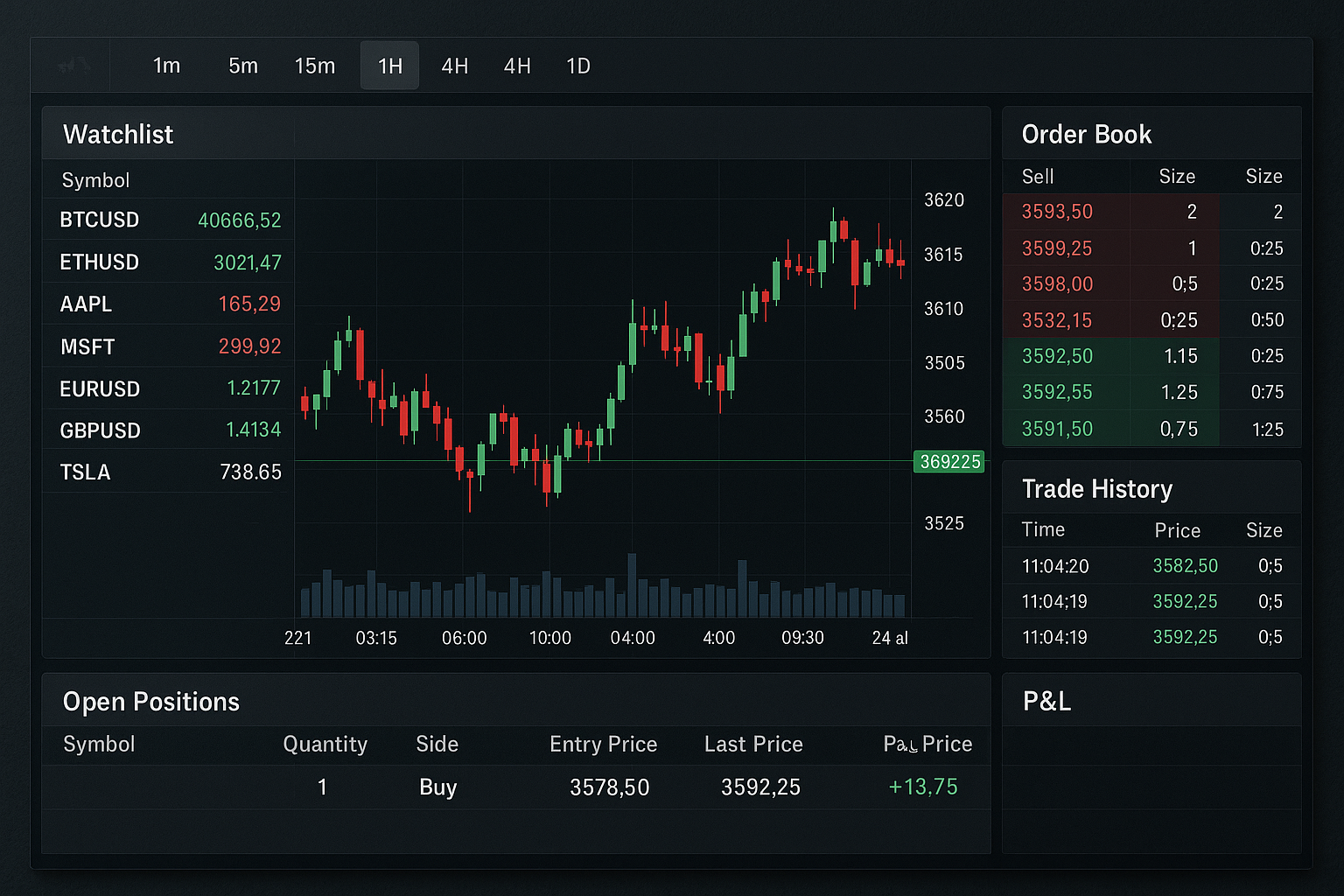
In 2026, institutional players entering onchain markets face a unique paradox. The transparency promised by blockchain technology should make risk assessment easier. Yet in practice, most institutions struggle with fragmented data sources, opaque risk models, and tools that weren't designed for the specific challenges of decentralized finance. This gap between promise and reality has created demand for specialized infrastructure that can bridge traditional risk management principles with the realities of onchain operations.
Strøm bitpulse represents a new approach to this challenge. Built specifically for institutions that need reliable, unbiased risk intelligence in crypto markets, this platform focuses on what many legacy tools overlook: deterministic data verification, real-time position monitoring, and neutral risk assessment free from conflicts of interest. For lenders, prime brokers, and asset managers navigating DeFi protocols and onchain exposures, understanding how this infrastructure works and what it delivers has become a strategic priority.
| Feature | Details |
|---|---|
| Primary Focus | Neutral risk infrastructure for onchain markets |
| Target Users | Institutional lenders, prime brokers, asset managers |
| Core Technology | Deterministic onchain data verification and simulation tools |
| Key Advantage | Independence from asset management, elimination of curator bias |
| Integration Options | Risk Suite API, Portfolio Monitoring, Sentinel alerts |
| Deployment Year | Active deployments throughout 2026 |
To Remember
Strøm bitpulse addresses the fundamental trust problem in onchain risk management by providing institutions with verifiable, deterministic data rather than heuristic estimates. The platform's neutrality comes from its independence: unlike risk curators who also manage assets, this infrastructure exists solely to deliver accurate risk intelligence. For institutions processing billions in onchain exposures, this separation makes the difference between confident decision-making and exposure to hidden conflicts of interest.
The platform currently monitors over $5 billion in positions with 99.9% uptime and has helped clients reduce margin requirements by 85% through more precise risk quantification. This track record reflects what happens when risk infrastructure prioritizes chain truth over convenient approximations.
What is Strøm Bitpulse and How Does It Work?
At its foundation, strøm bitpulse operates as an independent software and data provider designed exclusively for institutions participating in onchain markets. The platform doesn't manage assets, doesn't curate portfolios for third parties, and doesn't benefit from steering capital toward specific protocols. This structural independence defines everything about how the system functions.
The core architecture focuses on three interconnected capabilities: data integrity verification, simulation infrastructure, and continuous monitoring. Rather than relying on aggregated data feeds or third-party estimates, the platform pulls information directly from blockchain sources and applies deterministic logic to analyze positions, calculate exposures, and model potential outcomes.
Core Technology and Infrastructure
The technology behind strøm bitpulse starts with what the team calls "chain truth verification." In practical terms, this means every data point used for risk calculations traces back to verifiable onchain records. When the system reports a position size, collateral ratio, or liquidity depth, that information comes from direct blockchain queries, not inferred from trading patterns or supplied by potentially conflicted intermediaries.
This approach solves a specific problem that has plagued institutional adoption of DeFi: the absence of a single source of truth for liquidity analysis. Traditional risk tools adapted from TradFi markets make assumptions about order book depth and market impact based on historical patterns. Onchain markets behave differently. Liquidity can fragment across multiple automated market makers, change radically within a single block, and respond to oracle updates in ways that defy conventional modeling.
By building models directly on blockchain state rather than approximating it, strøm bitpulse delivers risk assessments that reflect actual market structure. When a lender needs to know whether a borrower's collateral can cover their position during a 20% price move, the platform simulates that scenario using real liquidity pools, actual slippage curves, and verified collateral positions.
Key Features for Institutional Users
The platform organizes its capabilities into several interconnected modules, each addressing specific institutional workflows. The Risk Suite API serves as the technical backbone, providing programmatic access to position analysis, collateral calculations, and exposure monitoring. Institutions can integrate these endpoints directly into their existing systems, whether that's a lending management platform, prime brokerage interface, or asset management dashboard.
Portfolio Monitoring operates as a real-time oversight layer. Rather than producing static risk reports that become stale within hours, this system tracks positions continuously, recalculating exposures as market conditions shift. For an institution managing multiple counterparties across various DeFi protocols, this means consolidated visibility into aggregate risk without manually querying dozens of separate contracts.
Sentinel represents the platform's alert infrastructure. Users configure thresholds based on their specific risk tolerance, then receive immediate notifications when positions approach dangerous territory. A prime broker might set alerts when any client's leverage exceeds 3x, while a lender could trigger warnings when collateral ratios drop below 150%. These aren't generic alarms based on price movements alone but contextual notifications that account for actual liquidation mechanics within specific protocols.
Integration with Onchain Markets
What makes strøm bitpulse particularly valuable for institutions in 2026 is its native understanding of how onchain markets actually operate. The platform doesn't treat DeFi protocols as black boxes or try to force them into traditional risk categories. Instead, it models the specific mechanics of automated market makers, lending protocols, perpetual swap contracts, and liquid staking derivatives on their own terms.
When analyzing a position in a lending protocol like Aave or Compound, the system accounts for variable interest rates, utilization curves, liquidation bonuses, and oracle lag. For liquidity positions in Uniswap v3 or similar concentrated liquidity AMMs, it calculates impermanent loss exposure based on actual price ranges and tick distributions, not simplified approximations.
This granular modeling capability extends to cross-protocol exposure analysis. An institution might have what appears to be a diversified portfolio across multiple DeFi platforms, but underlying correlations in collateral assets or shared oracle dependencies could create concentrated risk. Strøm bitpulse maps these connections, revealing how a liquidation cascade in one protocol might propagate through interconnected positions.
How Does Strøm Bitpulse Compare to Traditional Risk Management Tools?
The differences between strøm bitpulse and conventional risk platforms become apparent when examining how each approaches fundamental questions about position safety, market depth, and exposure calculation. Traditional tools emerged from decades of centralized market experience, where standardized instruments trade on regulated exchanges with predictable settlement mechanisms. Onchain markets follow entirely different rules.
Neutrality vs. Biased Risk Curators
Perhaps the most meaningful distinction lies in structural incentives. Many risk assessment platforms in crypto markets also participate in asset management activities, either directly or through affiliated entities. They might operate liquidity pools, manage vaults, stake assets, or receive compensation for directing capital toward specific protocols. These activities create inherent conflicts of interest that compromise the reliability of their risk assessments.
A risk curator with significant positions in a particular lending protocol has financial incentive to present that protocol as lower risk than alternatives. Their assessment tools might use generous assumptions about liquidation efficiency, downplay concentration concerns, or delay downgrading risk ratings when problems emerge. These biases aren't necessarily intentional or malicious, they're the natural result of mixed incentives.
Strøm bitpulse eliminates this conflict through deliberate business model design. The company generates revenue exclusively from software licensing and data provision, with zero exposure to asset management outcomes. This independence means risk assessments remain grounded in verifiable data rather than shaped by unstated financial interests. For institutions making lending decisions worth millions, this neutrality translates directly into more reliable intelligence.
Data Integrity and Chain Truth Verification
Traditional risk tools often rely on aggregated data feeds, treating blockchain information as just another input alongside price feeds, sentiment indicators, and market estimates. This approach introduces multiple points where inaccuracy can enter the analysis. A data aggregator might use sampling techniques that miss rapid state changes, apply smoothing algorithms that mask volatility, or fail to account for chain reorganizations that alter transaction finality.
The platform's insistence on deterministic, chain-sourced data eliminates these approximation layers. When calculating the liquidation price for a collateralized debt position, the system uses the exact collateral balance, borrowed amount, and protocol parameters recorded onchain. When assessing whether sufficient liquidity exists to close a position, it simulates trades against actual AMM reserves rather than extrapolating from order book snapshots.
This commitment to data integrity particularly matters during market stress. In stable conditions, rough approximations often suffice for risk management. But during rapid price movements, flash crashes, or network congestion periods, the difference between estimated and actual liquidity can determine whether positions get liquidated efficiently or suffer catastrophic losses. Strøm bitpulse's architecture performs reliably precisely when accuracy matters most.
Real-Time Monitoring Capabilities
Many institutional risk systems operate on batch processing cycles, generating reports on hourly or daily schedules. This latency reflects their origins in markets with regular trading hours and overnight settlement periods. Onchain markets never close. Positions can deteriorate from healthy to critical within minutes, especially during periods of high volatility or when network conditions create oracle lag.
The continuous monitoring infrastructure that strøm bitpulse provides matches the tempo of onchain markets. The system doesn't wait for scheduled report runs to detect problems. It watches positions block by block, recalculating exposures as transactions confirm and triggering alerts the moment thresholds breach. For institutions managing real-time risk, this responsiveness can prevent losses that batch-oriented systems would only detect after the fact.
This speed advantage compounds when combined with the platform's simulation capabilities. Rather than simply alerting when a position has already become dangerous, the system can model forward scenarios, warning institutions before problems fully materialize. A lender might receive notification that a borrower's collateral will approach liquidation thresholds if current price trends continue for another hour, creating time to contact the borrower or adjust margin requirements proactively.
Who Should Use Strøm Bitpulse for Their Risk Management Needs?
The platform serves three primary institutional categories, each with distinct operational requirements and risk concerns. While the underlying technology remains consistent, how each user type applies these capabilities varies based on their specific market participation model.
Benefits for Crypto Lenders
Institutions providing loans backed by crypto collateral face a particularly acute risk management challenge. Unlike traditional secured lending where collateral valuation happens periodically and liquidation takes days or weeks, crypto lending requires continuous collateral monitoring and rapid liquidation execution. Borrowers might post volatile assets as collateral, creating scenarios where a position adequate at loan origination becomes undercollateralized within hours.
Strøm bitpulse addresses this challenge by providing lenders with precise, real-time collateral valuation tied to actual liquidation mechanics. Rather than applying generic haircuts based on asset class assumptions, the platform calculates exactly how much a specific collateral package could realize through liquidation under current market conditions. This precision allows lenders to set tighter margin requirements without increasing risk, unlocking capital efficiency that generic approaches can't achieve.
The platform's monitoring infrastructure continuously tracks every outstanding loan, recalculating collateral adequacy as market prices shift. When positions approach dangerous territory, automated alerts give lenders time to request additional collateral, reduce loan amounts, or prepare for orderly liquidation. This early warning system has helped lending institutions reduce surprise liquidations and the associated losses that occur when positions must be closed during unfavorable market conditions.
Portfolio-level analysis tools let lenders understand aggregate exposures across their entire loan book. The system can identify concentration risks, such as multiple borrowers posting similar collateral packages or correlated exposure to specific protocols. This visibility supports more sophisticated risk management, helping lenders optimize their capital allocation and pricing strategies based on actual portfolio risk rather than simplistic per-loan assessments.
Solutions for Prime Brokers
Prime brokers facilitating client access to onchain markets need risk infrastructure that integrates seamlessly into their platforms while providing clients with transparency and control. These institutions face unique challenges: they must monitor risk across numerous client accounts simultaneously, each potentially active across multiple protocols and strategies, while maintaining clear accountability for who holds what exposure.
The Risk Suite API enables prime brokers to embed strøm bitpulse capabilities directly into their client-facing interfaces. Rather than forcing users to switch between multiple systems, risk data, simulation tools, and monitoring dashboards become native features of the prime brokerage platform. Clients can model position changes, assess margin impact, and track exposure limits without leaving the environment where they execute trades and manage their accounts.
This integration approach also streamlines operational workflows for the prime broker itself. Risk management teams gain consolidated visibility across all client activity, with standardized metrics calculated using the same deterministic methodology regardless of which protocols clients access. This consistency simplifies risk reporting, makes client limits easier to enforce, and provides clear audit trails when disputes arise.
For prime brokers serving sophisticated clients who trade actively across DeFi protocols, the platform's protocol-specific modeling capabilities prove particularly valuable. The system understands the nuances of leverage in perpetual swap contracts, the liquidation mechanics of different lending protocols, and the peculiar risks of concentrated liquidity positions. This depth of knowledge protects prime brokers from surprises when clients pursue complex strategies that simpler risk tools might mischaracterize.
Tools for Asset Managers
Asset managers navigating onchain markets face a different set of priorities than lenders or prime brokers. Their focus extends beyond preventing liquidations to optimizing returns across multiple strategies, protocols, and market conditions. They need visibility into yield generation, capital efficiency, and execution quality, alongside traditional risk metrics.
Strøm bitpulse provides asset managers with comprehensive portfolio analytics that track performance across the full range of DeFi activities. The platform calculates actual annual percentage yield for positions in various liquidity pools, accounting for trading fees earned, token emissions received, and impermanent loss incurred. This true performance measurement helps managers evaluate whether strategies deliver their expected returns or underperform after accounting for all costs and risks.
The system's liquidity analysis capabilities support better execution when rebalancing portfolios or exiting positions. Rather than submitting large orders without understanding market depth, managers can simulate trades across multiple pools and execution venues, identifying routing strategies that minimize slippage. During liquidation events, this functionality becomes particularly valuable, helping managers exit distressed positions with minimal market impact.
Portfolio monitoring tools give asset managers real-time visibility into how allocations shift as market conditions change. A liquidity position that started as a 50/50 split between two tokens might drift significantly as prices move, changing the portfolio's risk profile. Strøm bitpulse tracks these compositional changes continuously, alerting managers when rebalancing becomes necessary to maintain desired exposures.
How to Get Started with Strøm Bitpulse?
Implementing institutional-grade risk infrastructure requires careful planning and technical preparation. The platform's design accommodates various deployment scenarios, from rapid proof-of-concept integrations to comprehensive enterprise implementations that touch multiple systems across an organization.
Implementation Requirements
Before beginning integration, institutions should assess their technical environment and operational workflows. The platform functions as infrastructure that enhances existing systems rather than replacing them entirely. This means identifying where risk data needs to flow: trading platforms, loan management systems, client portals, internal reporting dashboards, and compliance monitoring tools all represent potential integration points.
Technical prerequisites include API access capabilities within your existing systems, the ability to consume real-time data feeds, and infrastructure for processing alerts and triggering automated responses. Most institutions deploying strøm bitpulse maintain hybrid architectures, where some risk calculations happen locally using the Risk Suite API while certain monitoring functions operate through hosted solutions that the platform team manages.
Organizational preparation matters as much as technical readiness. Risk management teams need training on how onchain risk differs from traditional market exposures. The platform provides sophisticated tools, but extracting maximum value requires understanding which metrics matter most for your specific use cases and how to interpret the deterministic data the system provides.
API Integration Process
The technical integration typically begins with sandbox access, where development teams can experiment with API endpoints using test data before connecting to production systems. The Risk Suite API follows RESTful conventions, with comprehensive documentation covering authentication, request formatting, response structures, and error handling. Most institutions complete initial integrations within two to four weeks, depending on the complexity of their existing infrastructure.
The API surfaces several endpoint categories, each serving specific workflows. Position analysis endpoints accept collateral and debt parameters, returning calculated risk metrics like liquidation prices, margin requirements, and exposure measurements. Simulation endpoints model hypothetical scenarios, showing how positions would behave under various price movements or market conditions. Monitoring endpoints provide continuous position tracking, with configurable alert thresholds and notification mechanisms.
Integration complexity varies based on how deeply institutions want to embed risk functionality. A basic implementation might query position risk during loan origination decisions, using API responses to approve or reject applications. More sophisticated deployments might trigger continuous monitoring for every position, automatically adjust margin requirements based on real-time risk assessments, and route liquidation orders through optimal execution paths identified by the platform's liquidity analysis.
Pricing and Deployment Options
The platform offers flexible commercial arrangements suited to different institutional scales and usage patterns. Pricing typically reflects the volume of positions monitored, the number of API calls required, and the level of customization needed for specific workflows. Enterprise deployments serving large prime brokers or major lending platforms involve custom agreements that account for integration complexity and ongoing support requirements.
Deployment options range from fully cloud-hosted solutions, where the platform team manages all infrastructure, to on-premises implementations where institutions run the software within their own data centers. Hybrid models allow sensitive risk calculations to occur locally while leveraging cloud-based components for functions like market data aggregation or complex simulation workloads that benefit from elastic compute resources.
Most institutions begin with a pilot program, applying strøm bitpulse to a subset of their operations while maintaining existing risk systems in parallel. This approach reduces implementation risk and provides time to validate that the platform delivers the expected improvements in risk accuracy and operational efficiency. Successful pilots typically expand to full production deployment within three to six months as organizations gain confidence in the system and identify additional use cases.
What Are the Main Advantages of Strøm Bitpulse Over Competitors?
When institutions evaluate risk infrastructure options for onchain markets in 2026, several platforms compete for their business. Understanding what distinguishes strøm bitpulse from alternatives helps clarify which solution best fits specific institutional requirements.
Transparency in Risk Assessment
The platform's commitment to transparency extends beyond marketing claims to architectural decisions that make risk calculations fully auditable. Unlike black-box systems that produce risk scores without explaining their derivation, strøm bitpulse provides complete visibility into how every metric gets calculated. Users can trace a liquidation price back to the specific collateral values, debt amounts, protocol parameters, and market conditions that produced it.
This transparency serves multiple organizational needs. Risk management teams gain confidence in the numbers they're using to make decisions, knowing exactly where each data point originates. Compliance functions can document risk management processes with precision, showing regulators or auditors that lending decisions rest on verifiable, deterministic calculations rather than opaque algorithms. Senior leadership receives risk reports they can actually understand, without needing advanced degrees in mathematics to interpret proprietary scoring systems.
Transparency also accelerates troubleshooting when results seem unexpected. If a position shows higher risk than anticipated, users can examine the underlying assumptions and market data to understand why. This diagnostic capability proves invaluable during market stress, when rapid assessment and response become time-sensitive.
Deterministic Data vs. Heuristic Models
The philosophical difference between deterministic and heuristic approaches to risk management shapes everything about how strøm bitpulse operates relative to competitors. Heuristic models rely on patterns, correlations, and statistical relationships observed in historical data. They work well when the future resembles the past but break down during regime changes, novel market structures, or unprecedented events.
Deterministic analysis, by contrast, models the actual mechanics of how systems behave. When calculating liquidation risk for a collateralized position, the platform doesn't estimate based on how similar positions behaved previously. It simulates the exact liquidation process: oracle price update triggering liquidation eligibility, liquidator transaction execution, collateral sale through specific AMM pools, and final position settlement. This mechanical modeling remains accurate even in situations never before observed, because it's grounded in how protocols actually function rather than inferred from past patterns.
This distinction becomes particularly pronounced during the tail events that pose the greatest risk to institutional operations. A heuristic model calibrated during calm markets will systematically underestimate risk during volatility spikes, precisely when accurate assessment matters most. Deterministic modeling doesn't suffer this weakness because it doesn't depend on market conditions resembling its training data.
Performance Metrics and Track Record
By mid-2026, strøm bitpulse has compiled a measurable track record that demonstrates the practical value of its approach. The platform currently monitors over $5 billion in onchain positions across institutional client portfolios, representing diverse exposure types and protocol integrations. This scale provides extensive real-world validation of the system's reliability and accuracy.
System uptime of 99.9% reflects the infrastructure's operational maturity. For institutions depending on continuous risk monitoring, this reliability means confidence that alerts will trigger when needed and that risk data remains available even during network congestion or market turbulence. The platform maintained this uptime standard throughout several significant market events in 2026, when competing systems experienced outages or degraded performance.
Perhaps most compellingly, clients report achieving 85% reductions in required margin for comparable risk levels after implementing the platform. This dramatic efficiency gain stems from replacing conservative generic haircuts with precise, position-specific risk calculations. When lenders know exactly how much collateral coverage they need because they can accurately model liquidation execution, they can operate with tighter margins without increasing actual risk exposure. This capital efficiency translates directly to competitive advantage and improved returns.
Conclusion
For institutions serious about participating in onchain markets during 2026 and beyond, risk management infrastructure represents a foundational capability rather than an optional enhancement. The specific challenges that blockchain-based protocols introduce, from continuous operation to novel liquidation mechanics, demand purpose-built solutions that understand these environments on their own terms. Strøm bitpulse delivers this specialized infrastructure through deterministic data verification, neutral analysis free from asset management conflicts, and continuous monitoring matched to market tempo.
The platform's growing adoption across lending institutions, prime brokers, and asset managers demonstrates that institutional players increasingly recognize the inadequacy of adapted traditional tools for onchain risk assessment. As DeFi protocols mature and institutional capital flows increase, the organizations that deploy sophisticated, transparent risk infrastructure position themselves to capture opportunities while others remain constrained by outdated approaches. For decision-makers evaluating their 2026 risk management strategy, understanding what platforms like strøm bitpulse deliver and how they differ from alternatives has become strategically important.
Summary
Strøm bitpulse provides neutral risk infrastructure specifically designed for institutions operating in onchain markets. The platform distinguishes itself through deterministic data verification pulled directly from blockchain sources, eliminating the approximations and biases that compromise traditional risk tools.
Three institutional categories benefit most from the platform: crypto lenders who need precise collateral monitoring and liquidation modeling, prime brokers seeking integrated risk tools for their client platforms, and asset managers optimizing yield strategies across multiple DeFi protocols.
Implementation centers on the Risk Suite API, which enables institutions to embed risk calculations, portfolio monitoring, and alert systems into existing workflows. The platform's transparent methodology lets users audit every risk metric back to its underlying data sources, providing confidence that assessments reflect actual onchain conditions rather than opaque algorithmic outputs.
By mid-2026, the system monitors over $5 billion in institutional positions with 99.9% uptime and has helped clients reduce margin requirements by 85% through more accurate risk quantification. This track record validates the practical advantages of purpose-built onchain risk infrastructure over adapted traditional tools.